Concept VC believes that lessons for the future can be found in the past, and therefore studying the patterns of previous development provides insight into the future. Chess has long been at the forefront of technological developments, as well as proving a very popular hobby. It was with this in mind that Concept Ventures hosted a blitz chess tournament on 22 July 2026 in our Concept Mews Office, bringing together founders, operators & machine learning engineers.
Chess & Computing
Chess has a relationship with computing that stretches back decades. The limitations of 64 squares and set movement patterns for each of the pieces create a relatively easily programmable world, whilst the depth and complexity present in skilful play provides for incredible depth. Many hold the 1952 computer program designed by Dietrich Prinz “Mate-in-Two” to be one of the earliest pieces of software. It enabled a computer to find any two-move checkmate that existed in a position, an early application of decision tree matrixes.

The first concerted attempt at teaching a computer to play chess began slightly earlier, with Alan Turing's 1948 "Turochamp" algorithm, which weighted piece values and used a decision tree to choose moves. It was too advanced for the era's hardware, so Turing only ever played it out by hand, acting as the CPU himself. A reconstruction was created in 2012 for a game against Garry Kasparov - where he exploited the shallow calculation horizon (3 moves or 6 ply deep) to win in 16 moves, the game score and final position below:

Turochamp - Kasparov: 1. e3 Nf6 2. Nc3 d5 3. Nh3? e5 4. Qf3 Nc6 5. Bd3?? e4 6. Bxe4 dxe4 7. Nxe4 Be7 8. Ng3 0-0 9. 0-0 Bg4 10. Qf4 Bd6 11. Qc4 Bxh3 12. gxh3 Qd7 13. h4 Qh3 14.b3?? 14. ... Ng4 15. Re1? 15. ... Qxh2+ 16. Kf1 Qxf2# 0–1.
The reason for Kasparov’s involvement in the match stems from his involvement both as a leading practitioner of computer enabled opening prep, and a key protagonist in the ascent of computer engines to the summit of world chess. He played two pivotal matches against Deep Blue, in 1996 & 1997 the latter of which, though not without controversy, marked the first time that a chess computer beat a world champion in a match.
At the heart of the controversy was a position in the second game of the 1997, shown below, where the computer declines the material gain of Qb6, instead playing the quiet Be4. Kasparov believed that the move Be4 was far too subtle to be found through brute calculation, and that any reasonable calculation horizon Qb6 was superior. Most contemporary chess engines when shown the position would opt to play Qb6, though modern engines almost universally pick Be4, as a result of the calculation horizon having moved far enough to recognise it as superior.
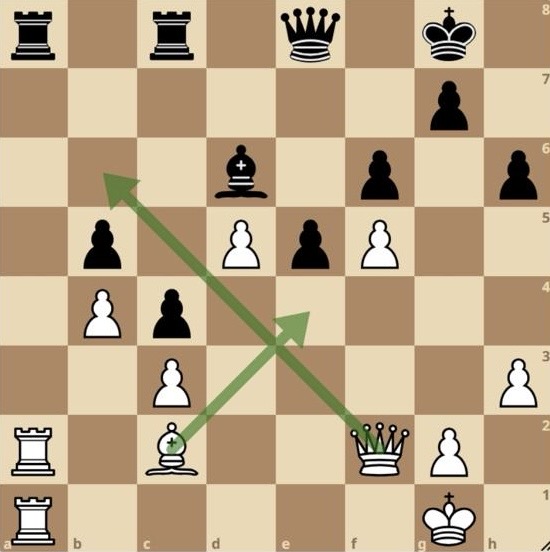
After the match Kasparov accused the IIBM team of intervening, via the assistance of one of the strong chess players who was on the team. Kasparov’s accusation was that at any reasonable calculation horizon for a machine, the forceful Qb6 would be superior, and that only human intuition could find Be5. After Deep Blue won the match, 3.5-2.5, IBM dismantled Deep Blue and never produced the logs, which show how it arrived at the decision, though there is some dispute if they even existed.
Deep Blue to AlphaZero
The lineage from Turing’s “Turochamp” through to Deep Blue is quite simple. All engines in this school (including modern programs such as Stockfish), are essentially using brute force to compare positions against pre-ordained weighting, technically described as a “hand crafted decision making heuristic”. Through trial and error, the algorithm was manually adjusted to weight specific factors until it reached optimal playing strength. The drastic increase in strength in this time period is driven predominantly by the increase in computing power, Moore’s law in action.
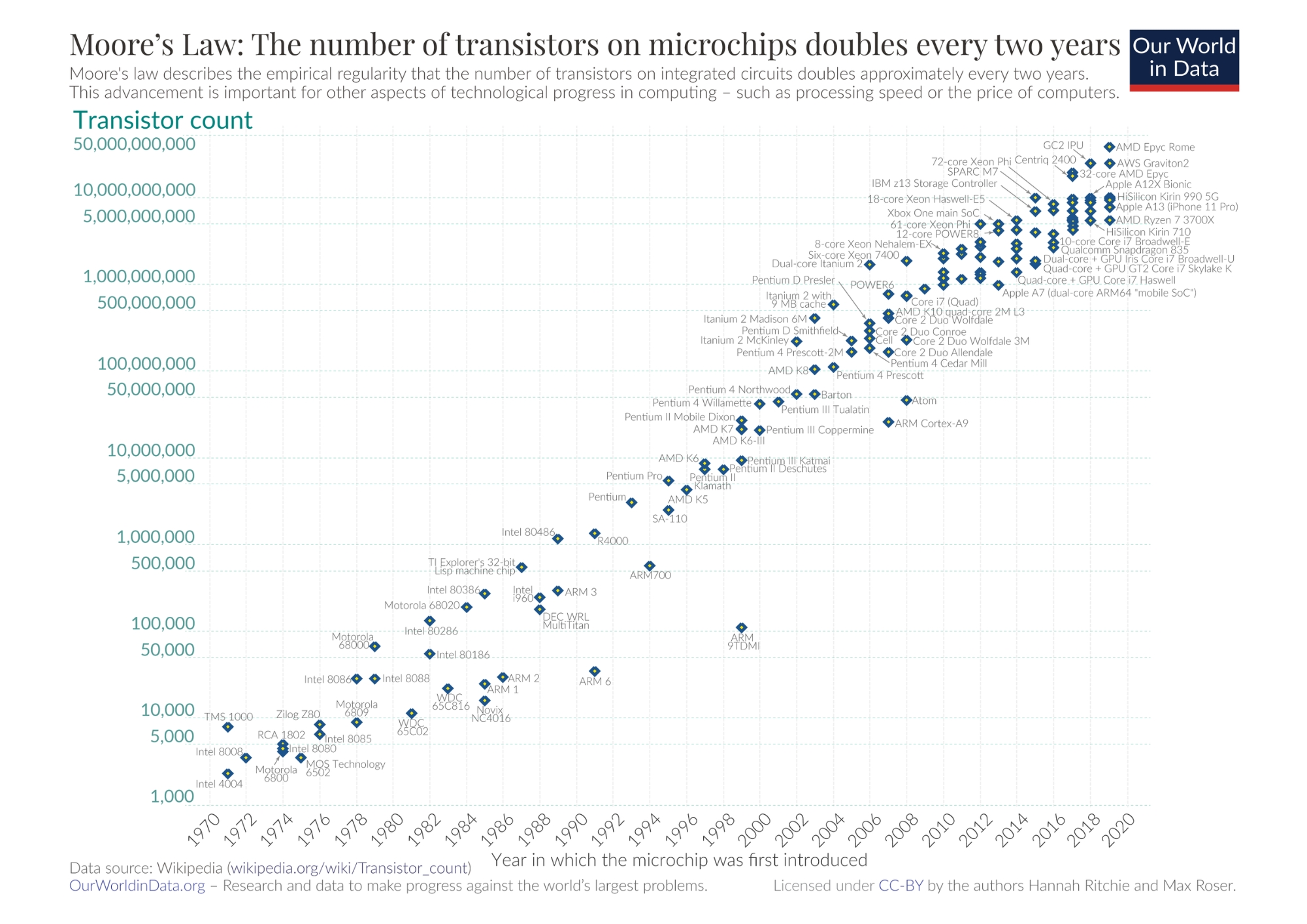
Whereas Pietz’s Mate-In-Two took 15 minutes to find all possible two move combinations, and successfully solve for any checkmates, a modern engine such as Stockfish works at a depth of 32 moves in seconds. Some of this increase in performance involves more advanced search algorithms, and an attempt to reduce duplication, but fundamentally the increase in strength is a result of the increase in compute power. The calculation horizon, at the heart of Kasparov’s allegation of cheating in 1997, by the early 2000s was moved so far beyond human reach as to be essentially invisible.
The consolation for most chess players following 1997 was that the engine was only superior due to brute force calculation, the understanding was still fed to it by the hand-crafted algorithm. The computer could crunch positions against this algorithm, but could not be regarded as having any “understanding” of chess in and of itself. DeepMind's AlphaZero (2017) changed this: a self-learning neural network with no hand-crafted rules that within 48 hours reached a strength where it was capable of defeating the world’s top players, and competing with conventional computer engines. The abstract of the paper summarise:
The strongest programs are based on a combination of sophisticated search techniques, domain-specific adaptations, and handcrafted evaluation functions that have been refined by human experts over several decades. In contrast, the AlphaGo… starting from random play, and given no domain knowledge except the game rules, achieved within 24 hours a superhuman level of play in the game of chess.
.jpeg)
AlphaZero was instead a closed box, self learning neural network, it did not rely upon hand-crafted weighting, and therefore it appears to “understand” chess in a way that no machine before it did. Matthew Sadler & Natasha Regan’s book Game Changer explored the impact this has made upon the understanding of chess, in particular how it produced insights into chess that no human would have tried to implement as a weighting. Whilst AlphaZero independently rediscovered mainline openings, such as the Sicilian & the Ruy Lopez, it also integrated new ideas that did not appear in conventional chess theory, most prominent amongst these was a willingness to push flank pawns. The exposed nature of an advanced a or h pawn was often outweighed by the space advantage that it could afford in an ending. The computer had changed from being purely a tool capable of calculation to something providing its own insight & style.
This dominance of the computer, even with it no longer relying on pure calculation, has not destroyed interest in chess, with more chess professionals employed than ever before, whether they are players, coaches or streamers. The ability to instantly evaluate a position has made it more accessible than ever before, anyone can watch an eval bar move up or down. The use of computers has allowed young players to reach a stronger level than ever previously achieved, with the record of youngest Grandmaster being consistently broken every few years.
Despite this, the need to balance compute led study with the ability to deeply focus has become a critical component of top level chess training. Javokhir Sindarov has credited long sessions of manual solving at a chess board, with his coach acting as a barrier between him and the machine, so as to get the benefit of computer assessed positions, without the laziness that seeing an instant evaluation can produce. Chess therefore points towards an example of the sort of hybrid human and machine work that is increasingly common in white collar professions. Chess players had something of a head start on the general population with machine learning. First having to content themselves with the concept that a computer can outplay them, and then a few decades later losing even the comfort that it only achieves this through brute calculation.
Concept Ventures sees this same pattern shaping the future: human expertise combined with cutting-edge tech for outsized impact. A portfolio example is Axon Labs, a London lab building brain-inspired AI for financial trading that decides selectively what to analyze rather than brute-forcing every option, closer to AlphaZero's intuitive style than Deep Blue's raw calculation. Axon Labs is founded by Nick D'Aloisio and Ayush Shah, and backed by Northzone, a16z Speedrun, and Concept Ventures.